

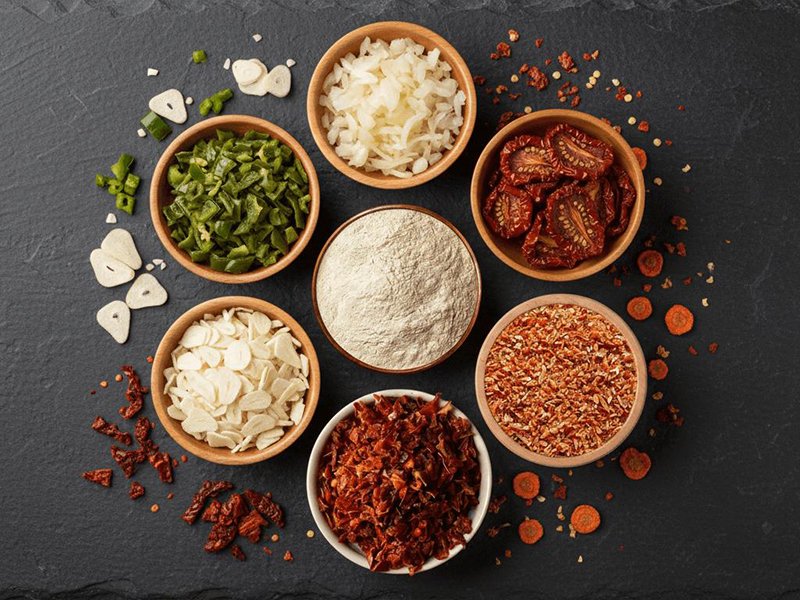
Dehydrated vegetables have become valuable ingredients in modern food processing. By removing much of their moisture through controlled drying methods, vegetables can be prepared in formats suitable for a wide range of manufacturing applications. From instant soups and seasoning blends to ready meals and packaged snacks, dehydrated vegetables help food manufacturers create convenient products while simplifying ingredient handling and storage.
Convenient Storage and Handling
Fresh vegetables contain significant amounts of moisture and generally require careful handling and storage. Properly processed dehydrated vegetables have lower moisture content, which can support longer storage periods when appropriate packaging and storage conditions are maintained.
Their convenient formats also make them easier to measure, transport, and incorporate into many industrial recipes.
Versatile Applications Across Food Products
Dehydrated vegetables are used in a variety of food manufacturing applications, including:
- Instant soups and noodle seasonings
- Spice and seasoning blends
- Ready-to-cook meals
- Sauces and gravies
- Savory snacks
- Food-service preparations
Vegetable flakes, powders, and dried pieces offer manufacturers different options depending on the texture and flavor requirements of the finished product.
Improved Production Planning
Food manufacturers often need ingredients that can be stored and used according to planned production schedules.
Properly processed and packaged dehydrated vegetables can help businesses manage ingredient inventories and reduce dependence on the immediate availability of fresh produce. Actual shelf life depends on moisture levels, packaging, storage conditions, and product specifications.
Supporting Consistent Product Formulation
Ingredient specifications matter in large-scale production. Factors such as particle size, moisture content, color, flavor, and microbial quality can influence how dehydrated vegetables perform in a recipe.
Working with a dependable supplier helps manufacturers establish suitable specifications and select ingredients that meet their product requirements.
The Importance of Quality Assurance
The quality of dehydrated vegetables depends on several factors, including raw material selection, hygienic handling, drying conditions, processing controls, and packaging.
Manufacturers should assess supplier quality systems, relevant test results, traceability procedures, and storage recommendations before selecting ingredients for commercial production.
Selecting a Reliable Dehydrated Vegetable Supplier
Before placing a bulk order, businesses should consider:
- Available vegetable varieties and product formats
- Ingredient specifications and quality documentation
- Packaging options and storage requirements
- Supply capacity and order consistency
- Export readiness and applicable food safety requirements
Clear communication about the intended application helps suppliers recommend suitable ingredient options.
Conclusion
Dehydrated vegetables offer food manufacturers a practical way to incorporate vegetable ingredients into a wide variety of products. With appropriate processing, packaging, and quality controls, these ingredients can support efficient production planning and consistent formulations.
Perfect Food Industries provides dehydrated vegetable items and other industrial food ingredients for manufacturers seeking dependable sourcing solutions.
Need dehydrated vegetables for your production line? Contact Perfect Food Industries to discuss product specifications, bulk supply, and sourcing requirements.